← Back to Identification Guide
Beatles records were pressed in Canada from 1963 up until the late 1980s (and up to the present day in CDs). Although the band's core catalogue was distributed by Capitol Records, the company did not always press its own records; they often subcontracted other companies to press their records from imported metal parts (pressing plates) sent directly, and almost exclusively, from Capitol USA's Scranton facility in the 60s and 70s (or glass masters sent from Jacksonville for CD production in the 1990s).
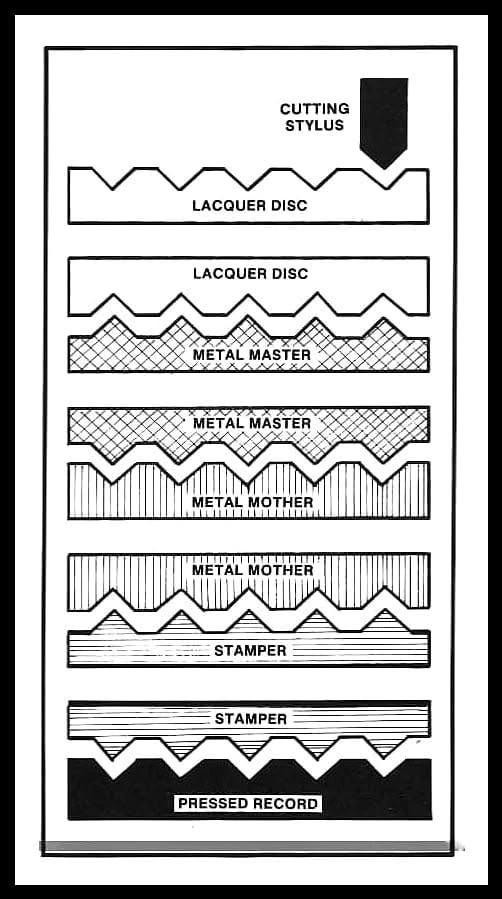
When metal parts were not sent to Canada, RCA Victor Studios in Toronto would prepare the metal master themselves from master tapes sent from the USA (often New York) --a lacquer master, a matrix, a mother and a stamper--this last part being sent to pressing plants.
**Interesting fact**
Early Beatles singles from the 72000 series and the three early unique Canadian albums from the 6000 series ("Beatlemania!, "Twist and Shout" and "Long Tall Sally") were a product of Capitol of Canada; completely designed and prepared in Toronto from UK master tapes, while subsequent releases were either made from master tapes or metal parts sent from the USA.
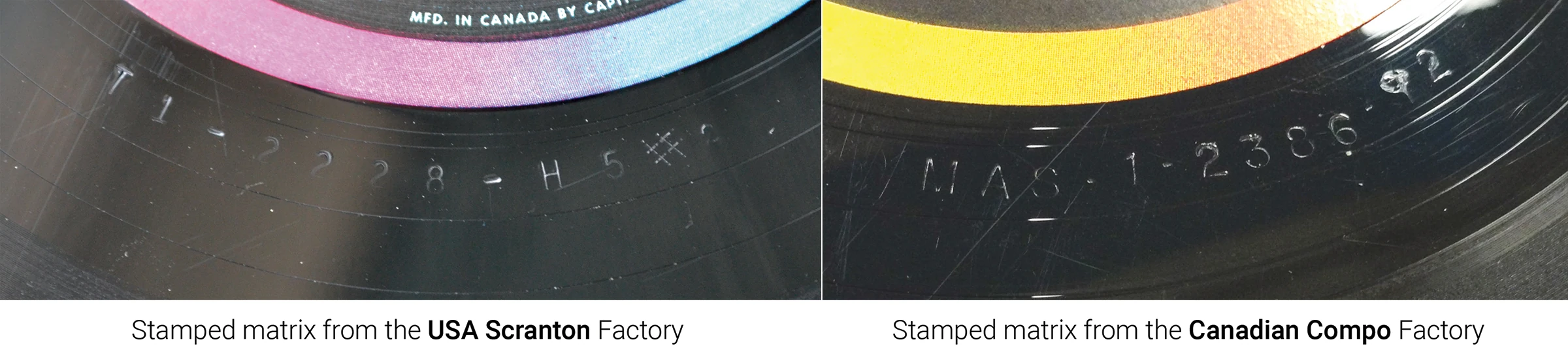
As a rule of thumb, when matrix numbers are stamped, these were made from US metal parts sent from Scranton, while hand-written matrix numbers refer to Canadian-made pressing plates made from USA master tapes. Beatles'65 is a good example since early copies are made from Scranton parts (stamped numbers -- as seen on the left image below -- as well as the Scranton triangle "International Association of Machinists" logo), while later copies were prepared by Graham Newton in Toronto (hand-written matrices with GN initials). Please note that Compo has also prepared some masters (for the Help! album, for example), and although these also have stamped numbers (as seen on the right image below), the master is Canadian-made; notice the typeface differences between Compo and Scranton discs: Scranton has a slightly more condensed font, while Compo has a rounder font.
Canadian master tapes
The tapes used in Canada were not Capitol of Canada's original masters. They were usually sent from Capitol's New York office, which itself worked from tape copies made from the masters kept in the Hollywood vaults (later tapes also came straight from Los Angeles). The lacquers cut in Toronto were therefore made from tapes at least two generations further removed from the original than the first-generation tapes used in Los Angeles. Each generation of tape copying can add a little hiss and take away a little high end, which is worth keeping in mind when comparing a Canadian pressing with its US counterpart. (Again, this is a general rule; how much it affects any given title remains to be documented.)
Reading the tape source and the lacquer cut
The run-out area tells more than a catalogue number. On American parts, the letter that follows the catalogue number names the lathe that cut the lacquer, and therefore the city: F, G, H and J (and A and B for stereo) point to Capitol's Hollywood studios, P, T, W and X (and later R) to New York. The triangular IAM logo, on the other hand, only says that the plates were made at Scranton, and Scranton made plates from lacquers cut on both coasts. Beatles'65 shows it well: the first mono copies (T1-2228-H5 / T2-2228-J6) were cut in Hollywood on both sides, while the first stereo copies (ST1-2228-X2 / ST2-2228-B6) have a side 1 cut in New York and a side 2 cut in Hollywood. A side cut in Hollywood therefore comes from first generation tapes, the best source of all (source: Pink Floyd Archives, "U.S. LP Manufacturing Information").
Hand-written matrix numbers follow a simpler rule: the lacquer was always cut in Canada (by RCA in Toronto or by Compo in the 60s and early 70s, then by Capitol itself, The Lacquer Channel (TLC), JAMF ("Just Another Mastering Facility") or CBS, whose names or initials often appear in the run-out). Help! is the exception mentioned above, cut by Compo but stamped. When an American lathe code turns up on a hand-written Canadian matrix (H22 on the late 1970s Capitol pressings, for example), it only tells which tape the Canadian lacquer was cut from, a Los Angeles tape in that case.
These rules, cross-checked with Piers Hemmingsen's matrix chart, are where the "Master Source" (tape and plate origin) and "Lacquer Cut" values on each variation page come from (source: P. Hemmingsen, Matrix Chart For Beatles Records From 1962 To 1971).
Reading a Capitol catalogue prefix
The letters in front of a Capitol catalogue number form a small code of their own, each letter with its own job:
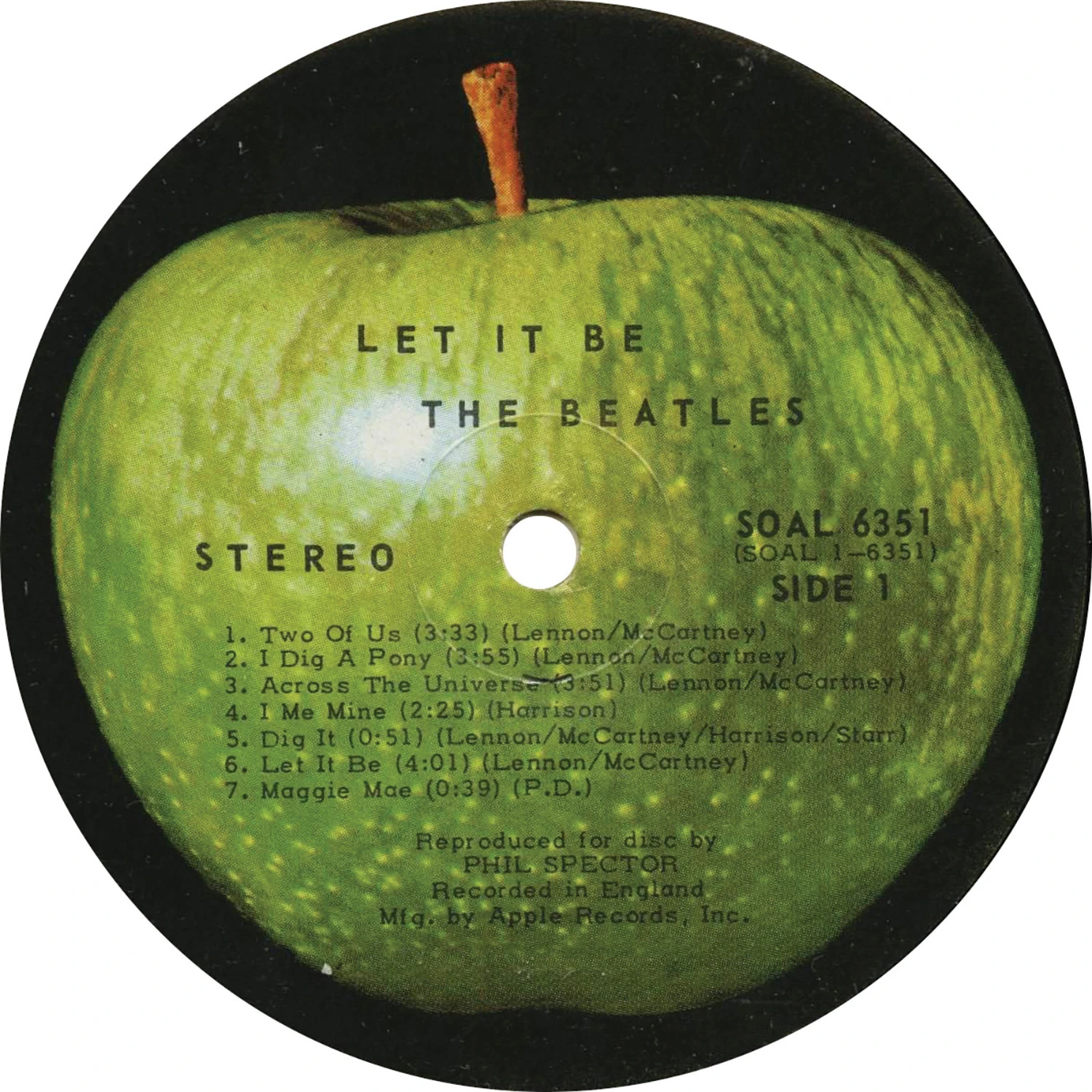
Read that way, STBO-2222 (the stereo Beatles' Story) is a stereo, full-price, two-disc set with special packaging (its gatefold). SOAL-6351 (Let It Be) is a stereo, price code O, single disc, with L for the book that came in the box. SEBX (Love Songs) is a stereo, price code E, two-disc set, with the X usually given to coloured or picture discs, which fits its gold vinyl.
Finally, each pressing plant had its own equipment that left different "tool marks" on the pressed disc, namely by its gripper that left a pressing ring, like a signature that is unique to every plant. These markers are the main identifier of where a particular record was pressed (along with matrix information). Below is a list of the different pressing plants contracted by Capitol for Beatles records, with photo examples of their distinctive features to allow proper identification of Canadian pressed discs.
The timeline below shows when each manufacturer pressed (or duplicated) Canadian Beatles records, all formats included. Lane numbers match the numbered sections below; the same data can be explored format by format in the Timeline Tool.
* Malton and Mississauga are the same plant at 3109 American Drive: the address changed in January 1974, when the company became Capitol Records-EMI of Canada.
1. RCA Victor
RCA in Smiths Falls has pressed Beatles records between 1963 and mid 1976 (their pressing duties ended when Capitol opened up its own pressing plant in Mississauga). RCA pressed both albums and singles for Capitol. RCA discs are recognized by their 70 mm deep groove (for LPs - left image) and by the closed "L" loop in the Capitol logo on the singles (right image). RCA also prepared lacquer discs in Toronto for pressings in other non-RCA plants (e.g., Capitol's Mississauga plant, Compo and Cinram).
Some RCA pressed LPs have what looks like a single 70 mm ring (a recessed centre instead of a deep groove), and these have been raising questions amongst collectors who some claimed might even not be RCA pressings. After deeper research, the authors consider them as a "pressing default" or inconsistencies (where pressure or a trapped air bubble probably affected the shape of the label area where the deep groove is found) rather than a different pressing variation. There is no indication that these originated from different machines at a different time, so these do not warrant a special entry in this archive - some records even have a single ring on one side and a deep groove on the other, proving these are simply "regular RCA pressings". Below is an example showing both (different) sides of the same first pressing from 1970:
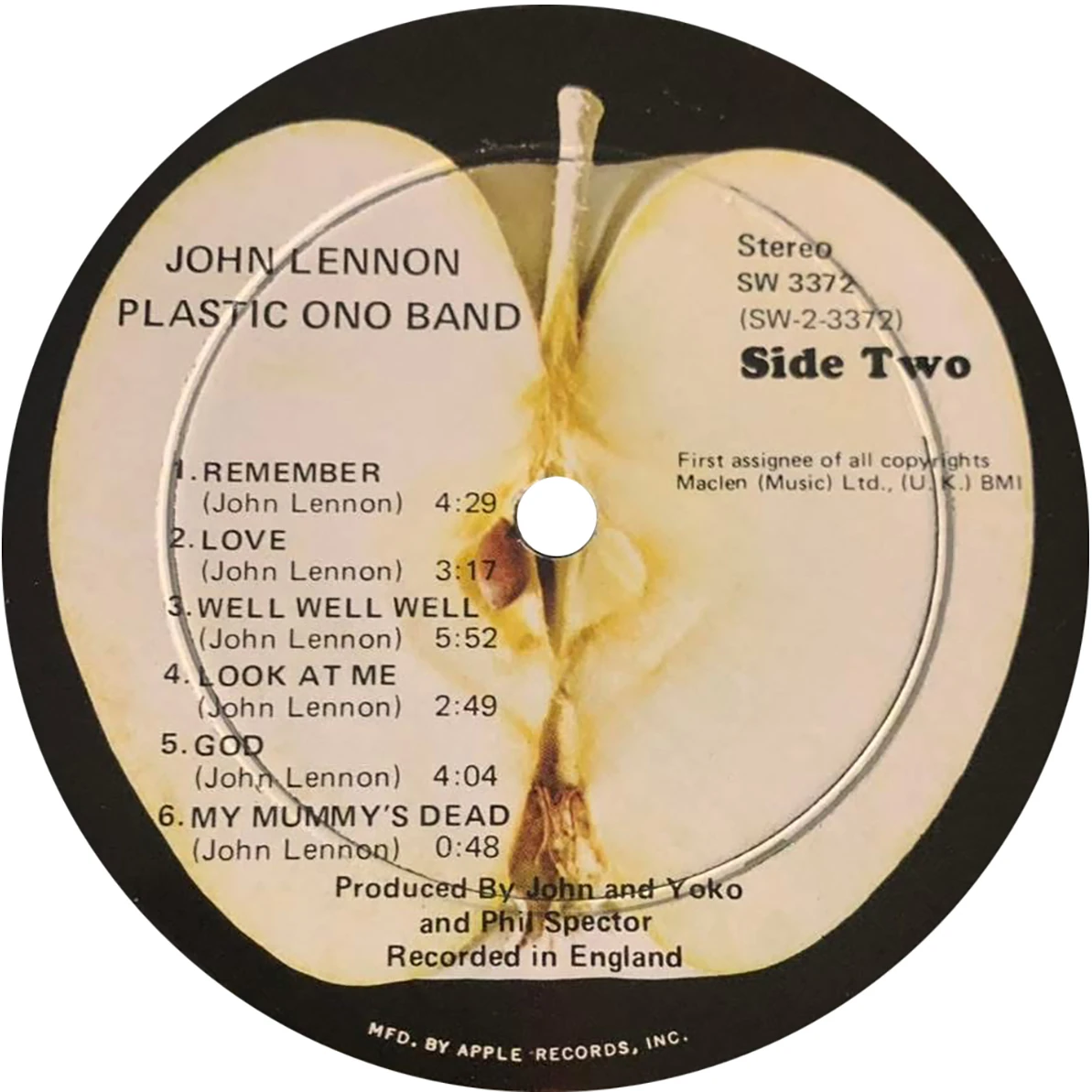
In the early 1970s, RCA was experimenting with a new vinyl compound called "Dynaflex" that was meant to be more flexible, resulting in really floppy records that were at times much thinner. Dynaflex was RCA's answer to the rising cost of vinyl and to the warping and breakage problems of traditional records: a specially formulated compound allowed records to be pressed considerably thinner (a typical Dynaflex disc weighs 90 to 110 grams, against 120 to 150 grams for a standard pressing) and to flex without breaking. The savings on material and shipping were real, but the reception was mixed: the thin discs resisted warping in theory, yet results were hit and miss in practice, and audiophiles debated whether the lighter vinyl reduced dynamic range and increased surface noise. Many buyers simply preferred the feel of a traditional, heavier record.
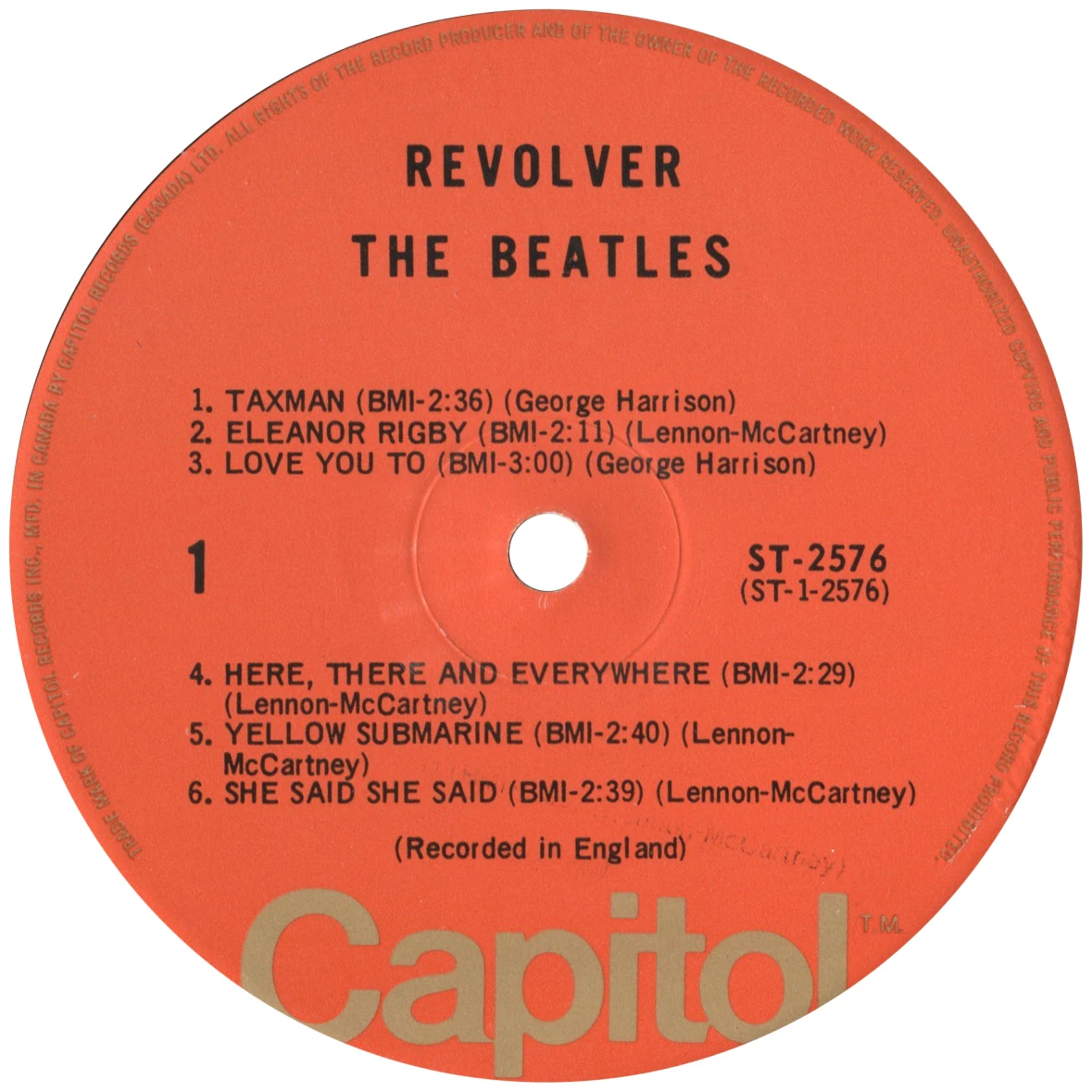
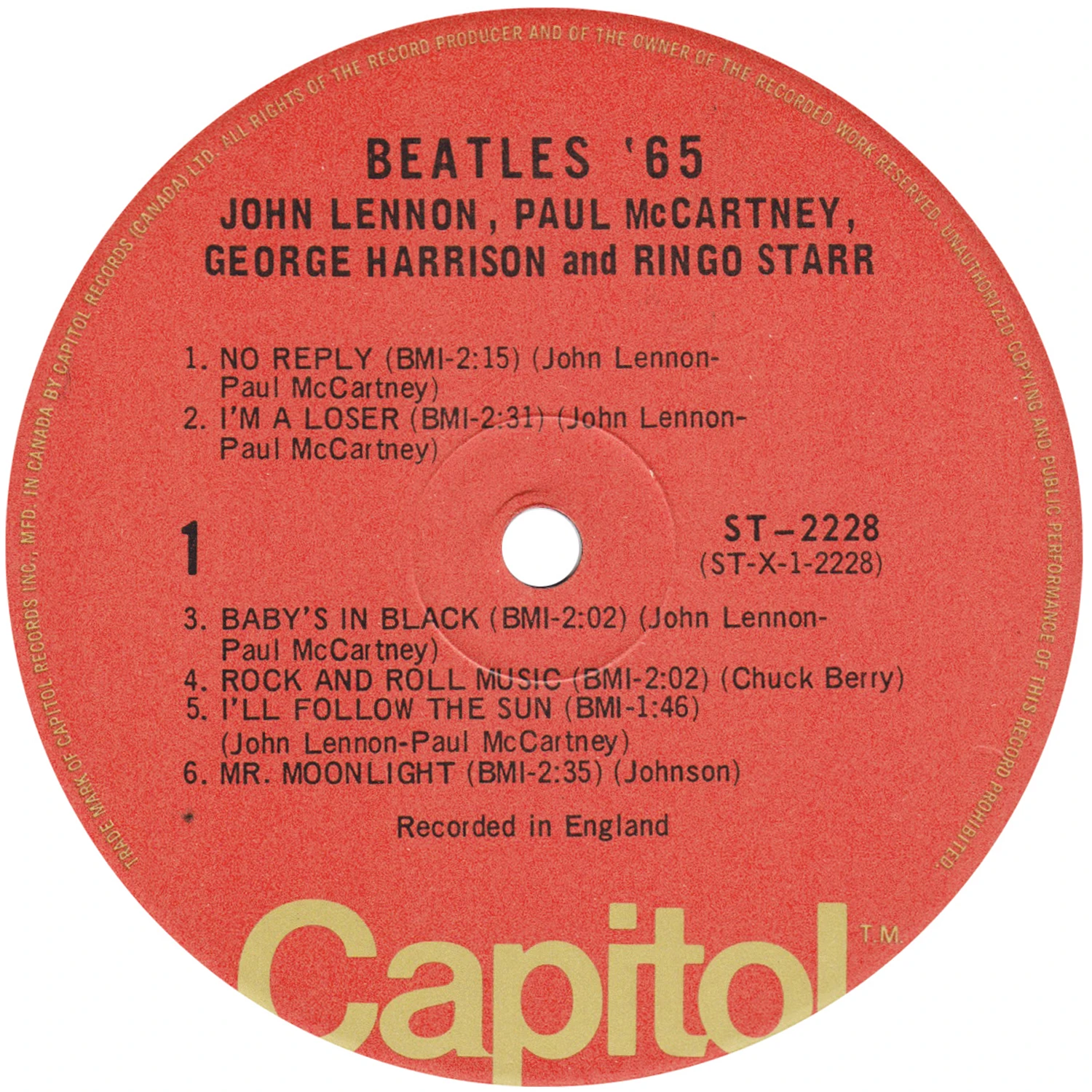
These Dynaflex pressings had a different pressing ring that was considerably smaller and almost identical to Compo pressing rings (24 mm instead of 25 mm). Unless a specific album was originally pressed by both factories (Rubber Soul or Apple albums, for example), masters were usually not sent back and forth between companies; smaller ring reissue pressings are therefore usually either "still Compo" for "traditionally Compo albums" (like Revolver or Pepper), or Dynaflex pressings for "traditionally RCA albums" (like Beatles'65 who has a Dynaflex reissue on the orange label).
For more details on RCA Victor and pressing information, please visit
Capitol6000.com, and read Piers Hemmingsen's
The Beatles in Canada, The Origins of Beatlemania.
2. Compo
Compo has pressed Beatles records between 1962 and circa 1973 (then MCA), after which Columbia (CBS) took over and in turn, was replaced by Capitol in-house pressings in 1976. Compo pressed both albums and singles for Capitol. Compo discs are recognized by their small 25 mm pressing ring (for LPs - left image), and by the open "L" loop in the Capitol logo on the singles (right image). Compo was mostly used in support of RCA with high demand orders (like the Beatles), but seem to have become the main subcontractor for Apple albums between 1968 and 1975 (where RCA would have come in support during high demand periods).
Compo's pressing plant in Lachine, Québec (near Montreal) pressed the rare My Bonnie single on Decca in 1962, but operations quickly moved to their new Cornwall, Ontario plant in 1963. It is not known if the change was completed by 1963, but it seems that all copies of A Hard Day's Night (and later albums) were pressed exclusively at the new Cornwall facility, although the back cover of all copies up until the tan label state the Lachine plant. Finally, Compo also pressed Beatles records for Polydor and ATCO.
3. Columbia / CBS
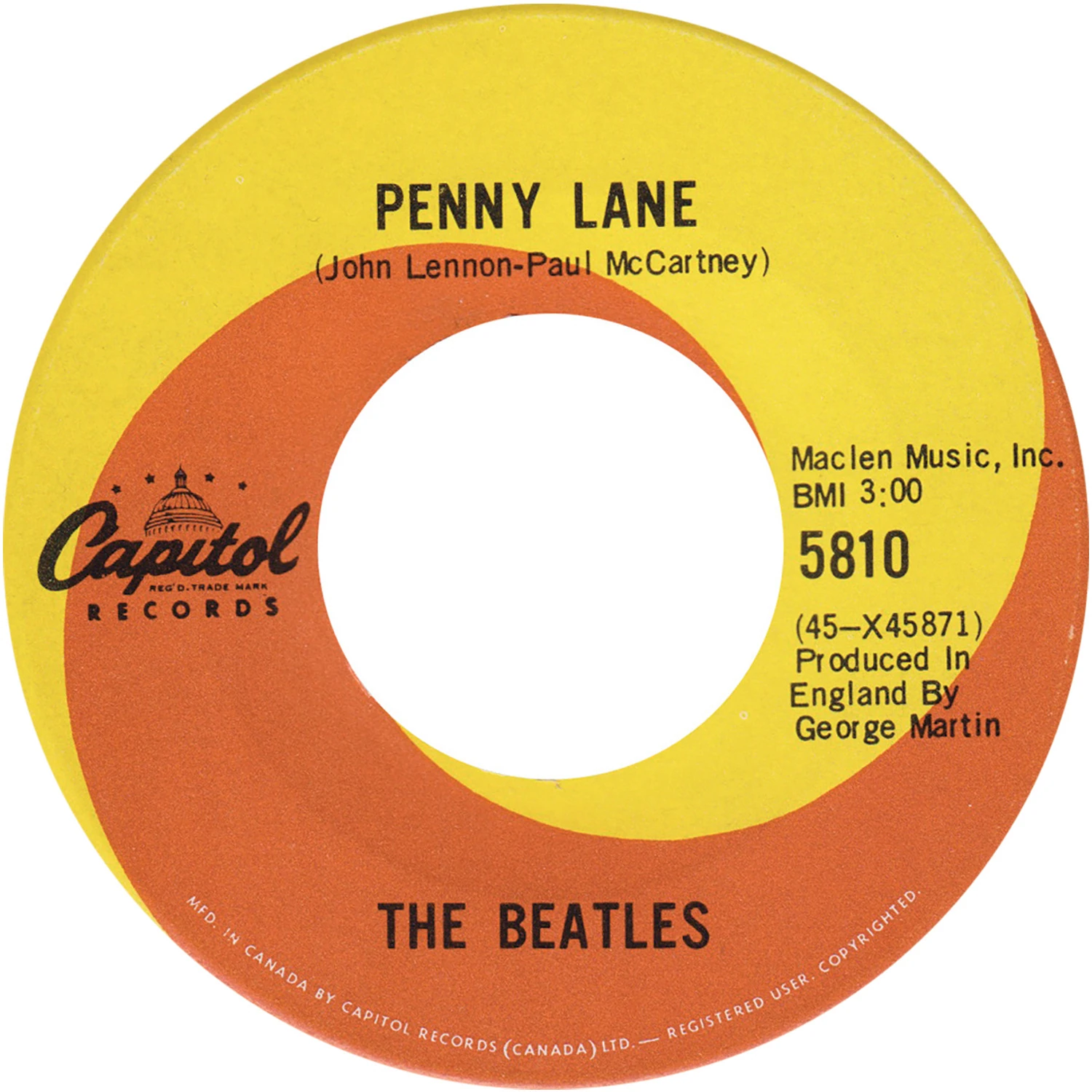
Columbia (or CBS) has pressed Beatles records as early as 1973, following a worker strike at Compo/MCA, and pressed albums for Capitol until 1976. The strike was apparently never resolved and CBS was therefore used again as the main pressing plant for Capitol, between early 1984 (when Capitol's Mississauga plant was decommissioned) and August 1988 when the CBS factory stopped pressing vinyl records and hired Cinram to take over pressing operations.
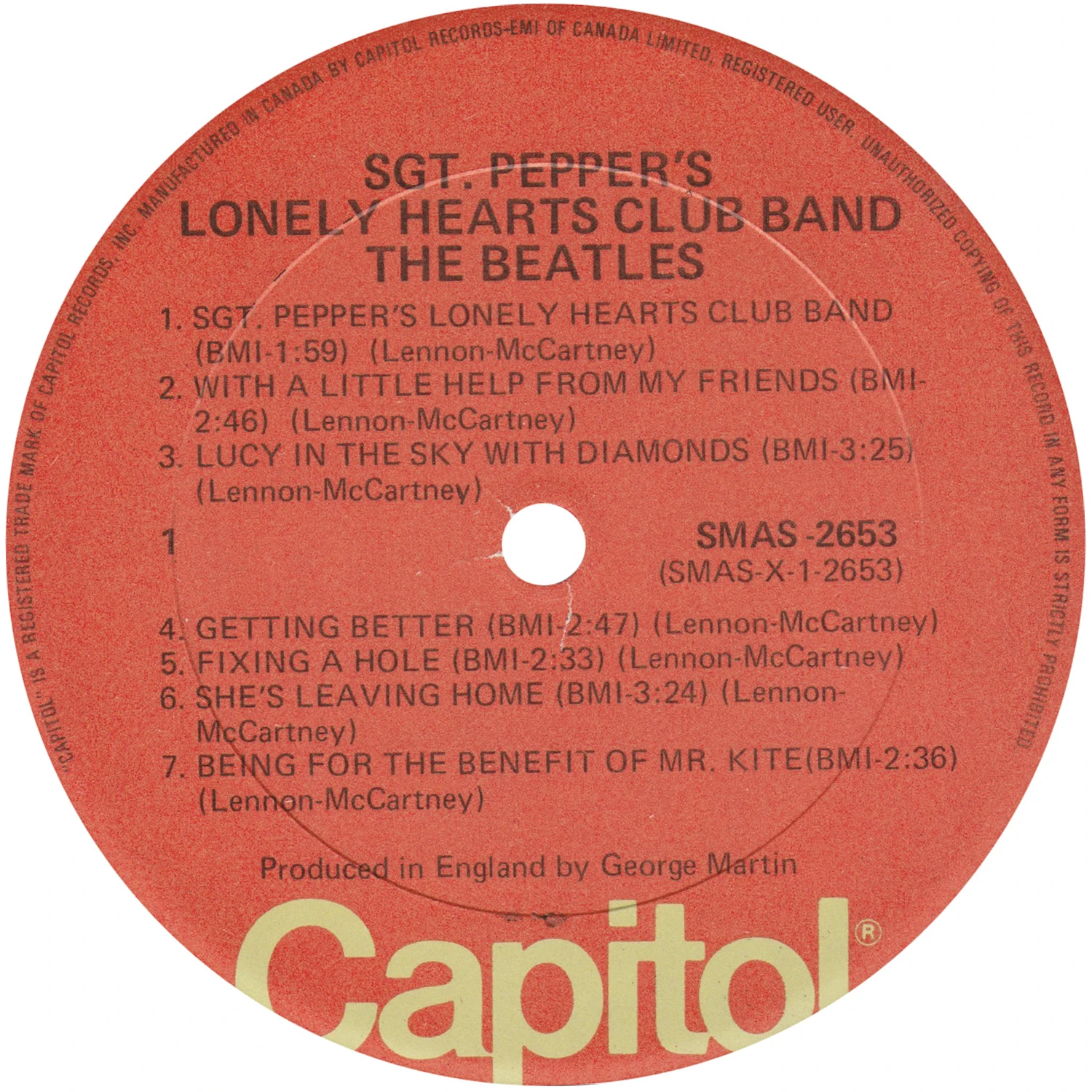
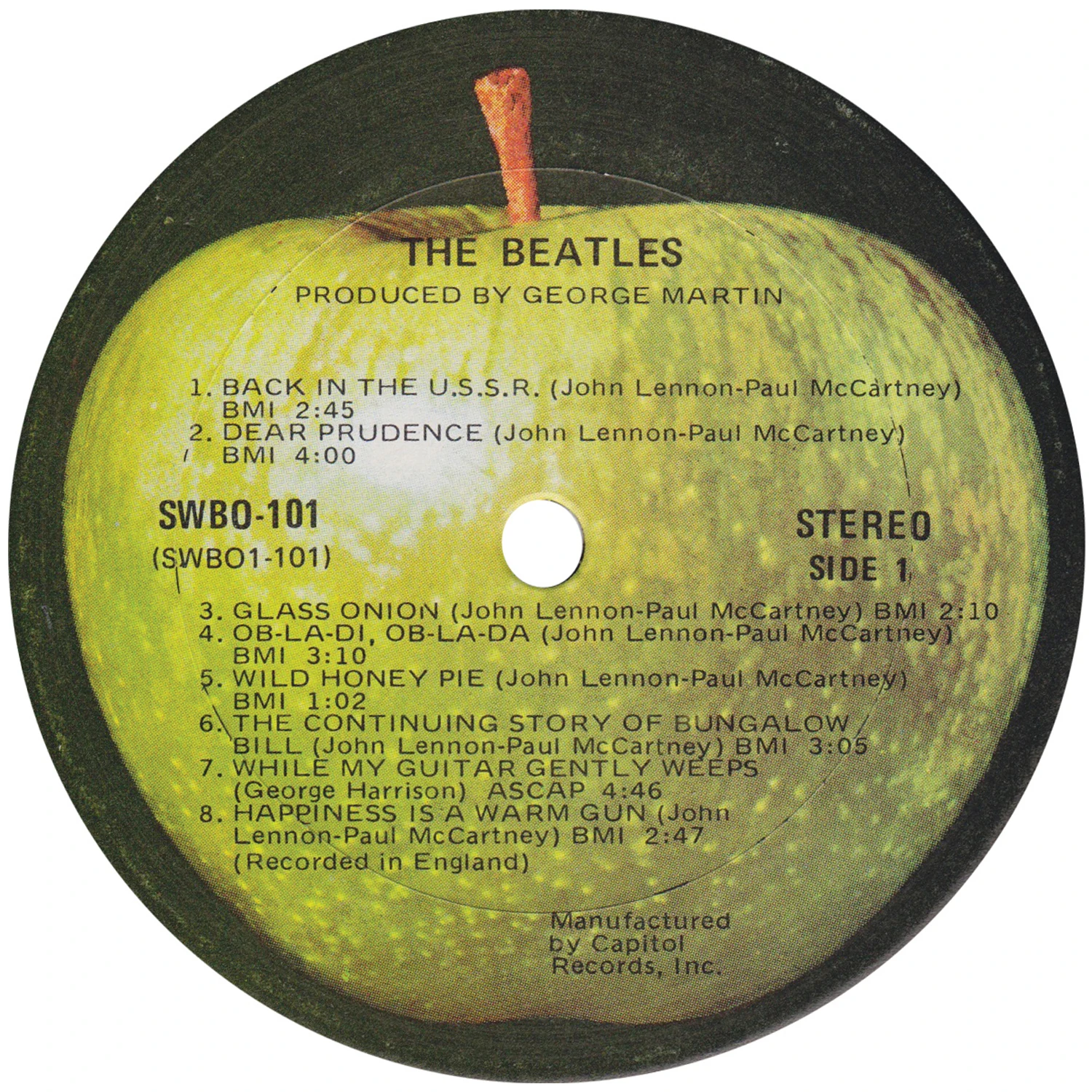
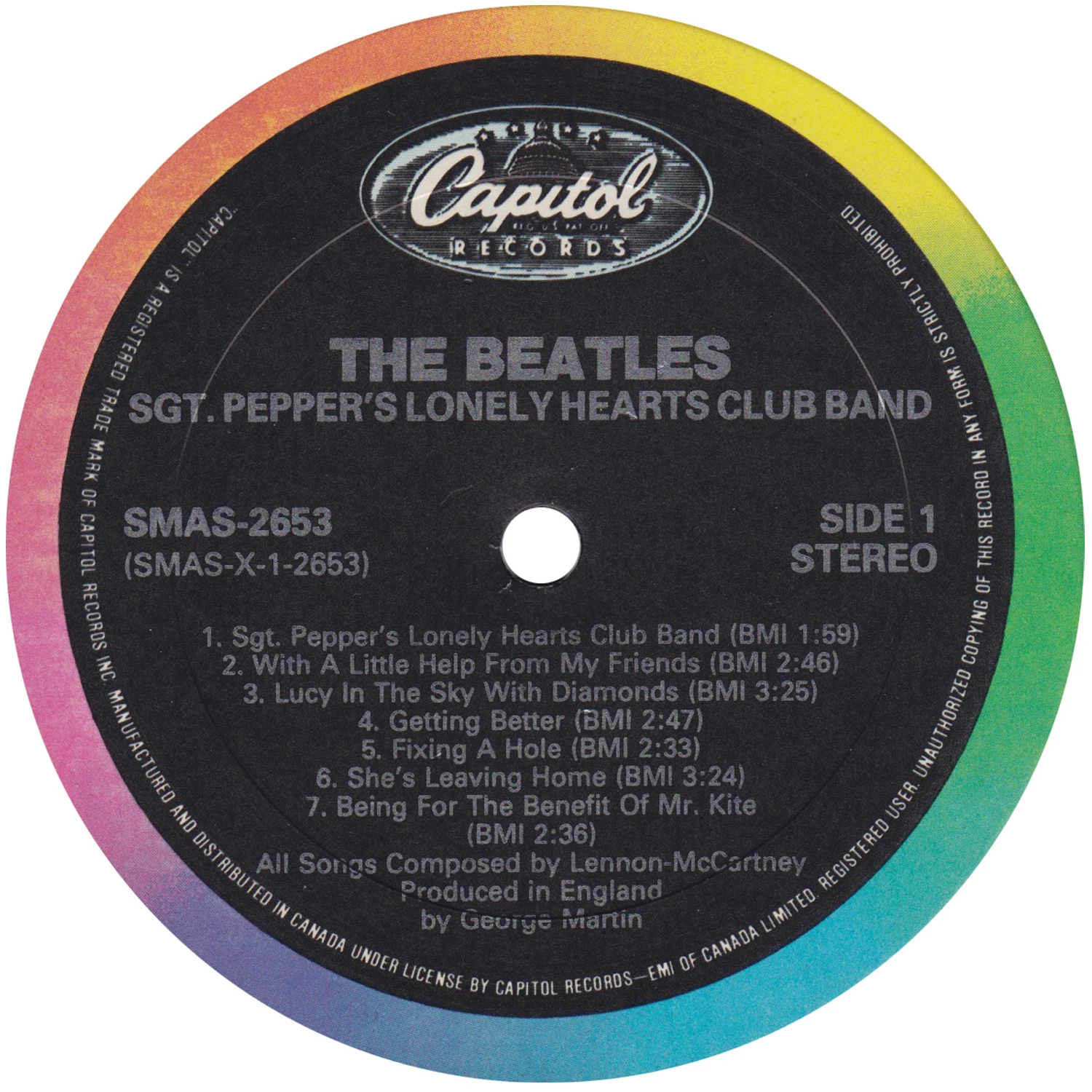
Columbia pressed both LPs and singles. Columbia discs are recognized by a very thin 68 mm pressing ring (for LPs), their flat textured Apple labels and by their etched matrix numbers that follow typical Columbia numbering. Both subcontracting periods display similar characteristics, but 1970s records on the orange label (left image) are usually much thicker than their later retro rainbow counterparts (right image). Columbia also took over pressing Apple records between 1973 and 1975 (centre image). For singles between 1973 and 1975, on the other hand, it seems only non-Beatles Apple titles were pressed by CBS for Apple; Beatles Apple 45s were seemingly imported from the USA instead (but Capitol Beatles titles were still being pressed by CBS as needed).
4. Keel
Keel pressed for Capitol between 1969 and 1978. Keel was pressing records for budget labels like Pickwick, which had in turn been distributed by Capitol starting in 1967. It is no surprise that Capitol explored its options with one of its close subcontractors. Keel pressed only albums (when it comes to Beatles) for Capitol, and Keel discs are recognized by their 70 mm thin pressing ring (similar in size to RCA, but similar in style to Columbia). Another tell is the overall quality of Keel pressings that usually appears to be substandard (the ring and labels are not as cleanly pressed). Keel pressings can be found with green target labels (left image), orange labels (centre image) and purple labels (right image). Orange labels Keel pressings often (but not always) have a small "k" printed on the label (see centre image).
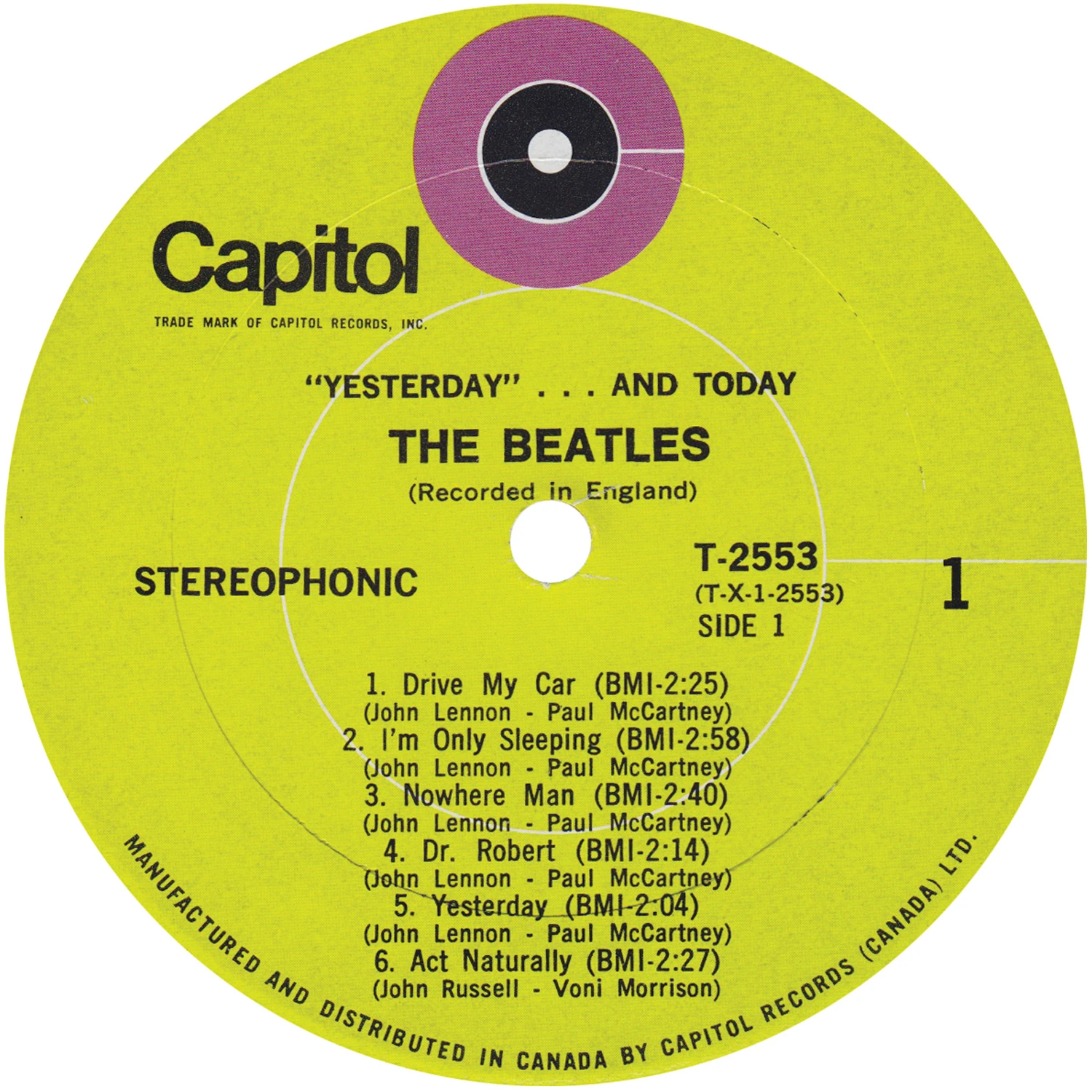
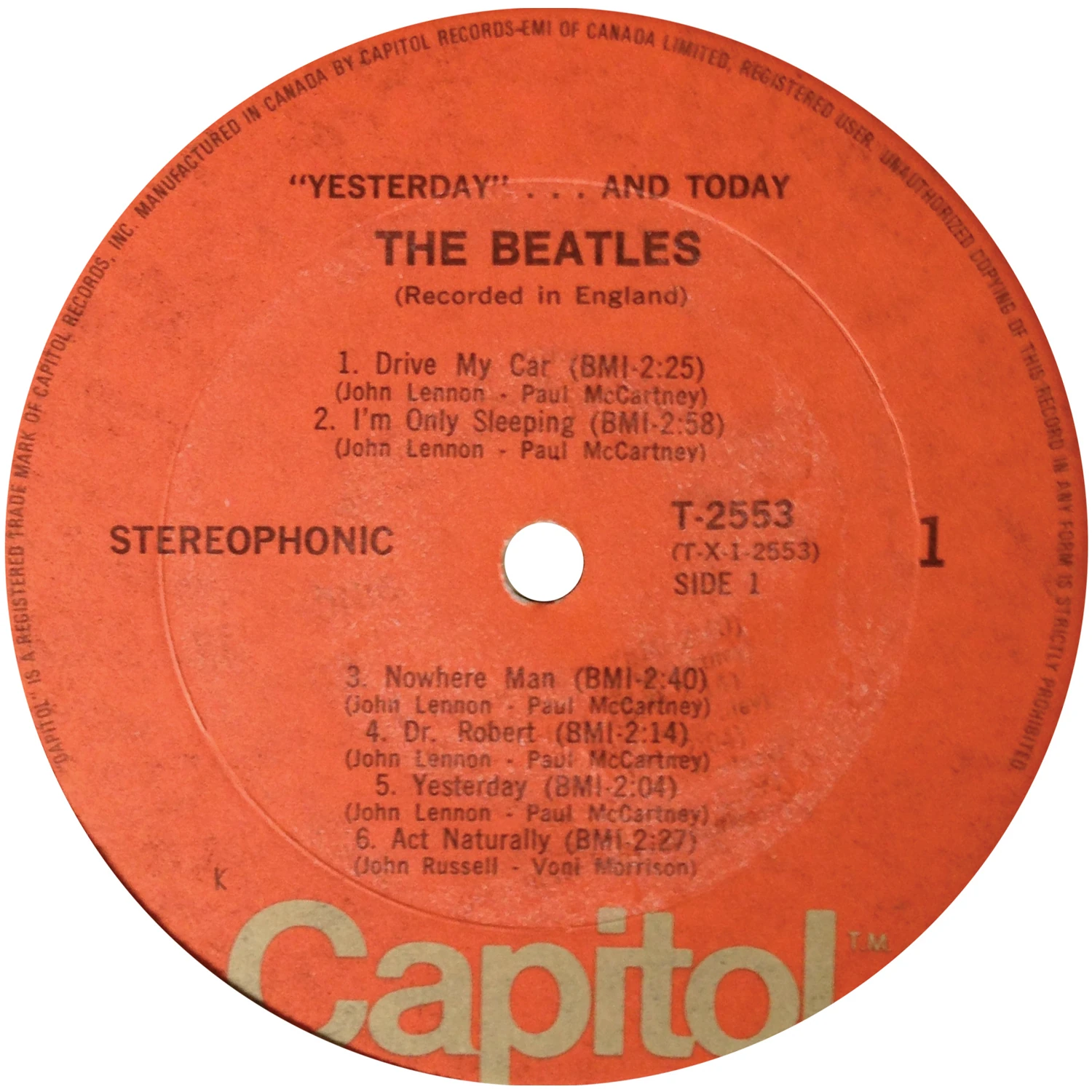
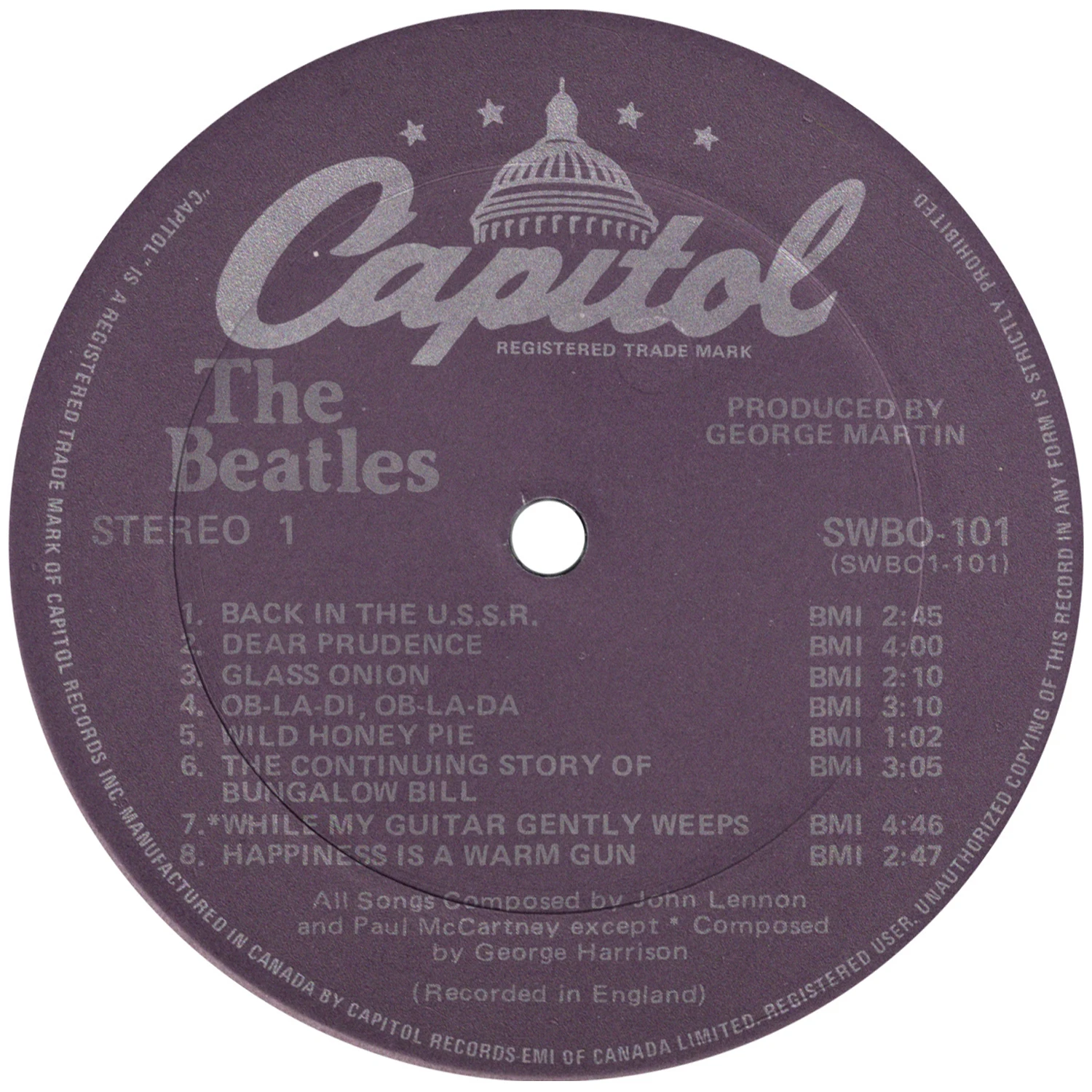
5. Capitol
Capitol of Canada opened its own pressing facility in 1976. While singles were pressed early on that year, the first albums produced at the new plant appeared only in October. These first Capitol album pressings also seem to come from newly cut masters, made from tapes that Capitol USA (re)sent for the occasion, most likely as part of a catalogue-wide effort to modernize the back catalogue (Rubber Soul, for example, has a different mix on all of its Capitol pressings). Capitol pressed both LPs and singles at the Mississauga plant. Capitol discs are recognized by their 39 mm pressing ring (for LPs - left and centre images), and by their bumpy ridge and smaller labels on the singles (right image). The last Beatles discs produced at the plant were on the retro rainbow label in 1983, after which operations were transferred to Columbia (CBS).
**Important note**: Capitol also made its own tapes, at the tape plant it opened in 1970 and moved to the Malton site the following year (see section 8). Cassette production outlived the vinyl plant and carried on at Mississauga until late 1994.
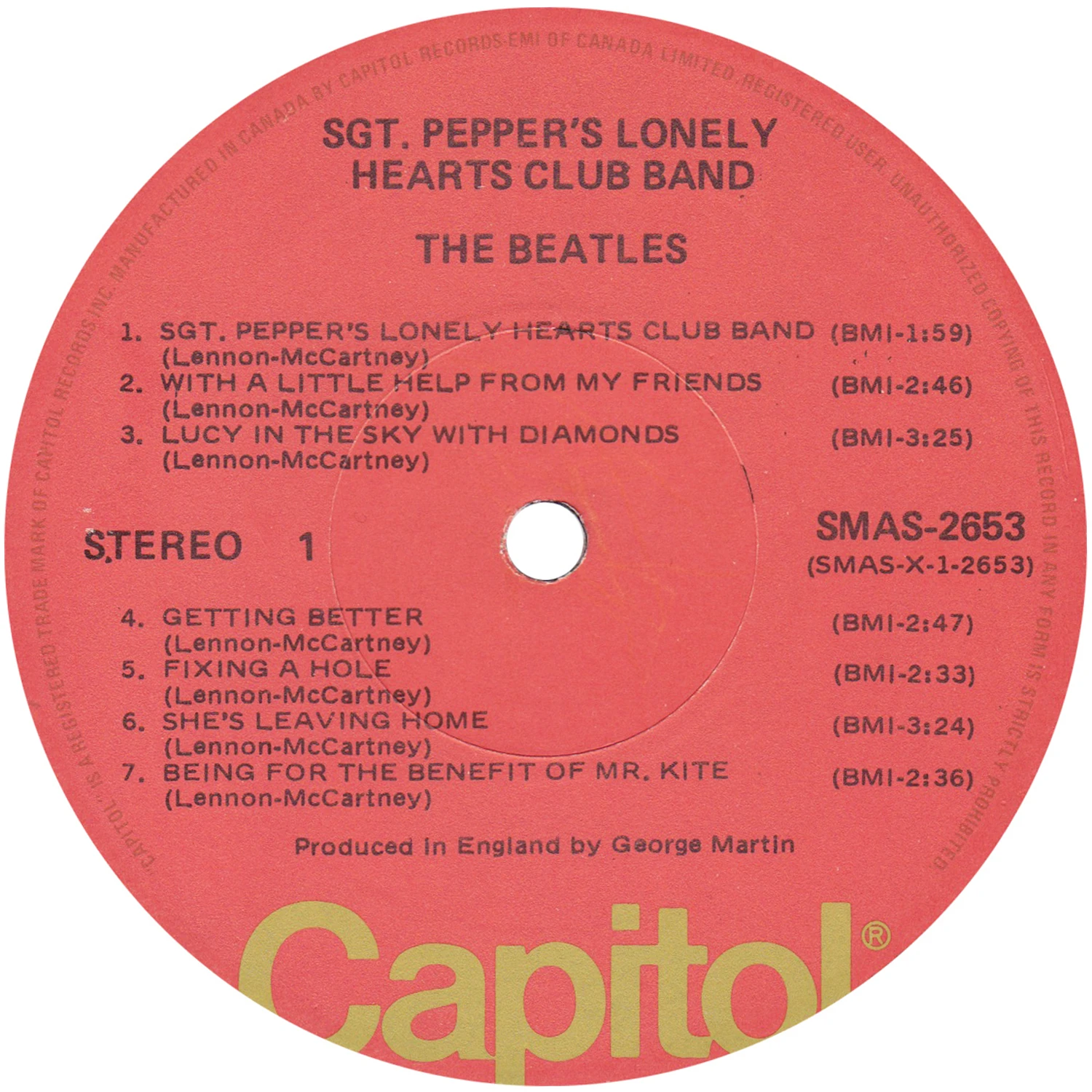
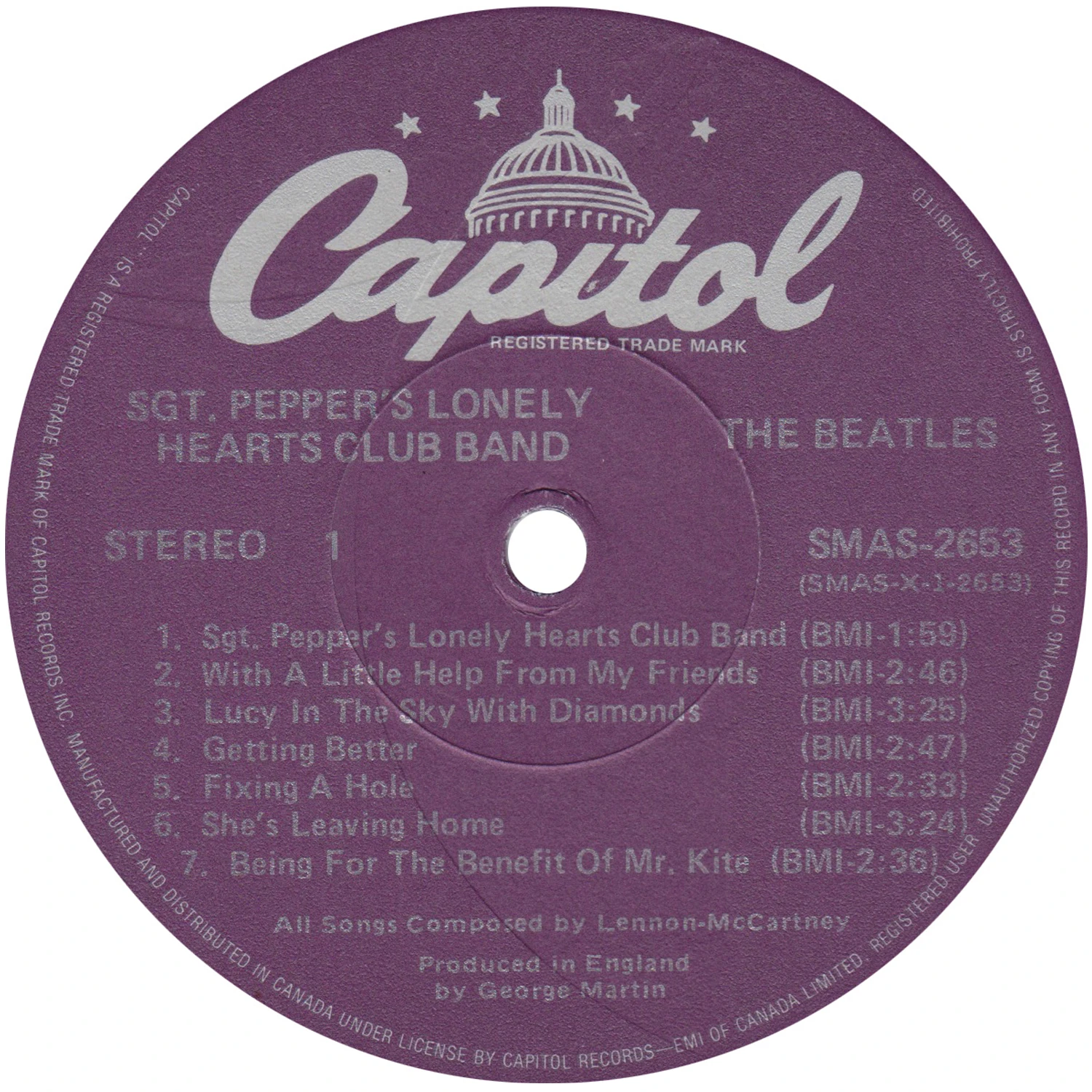
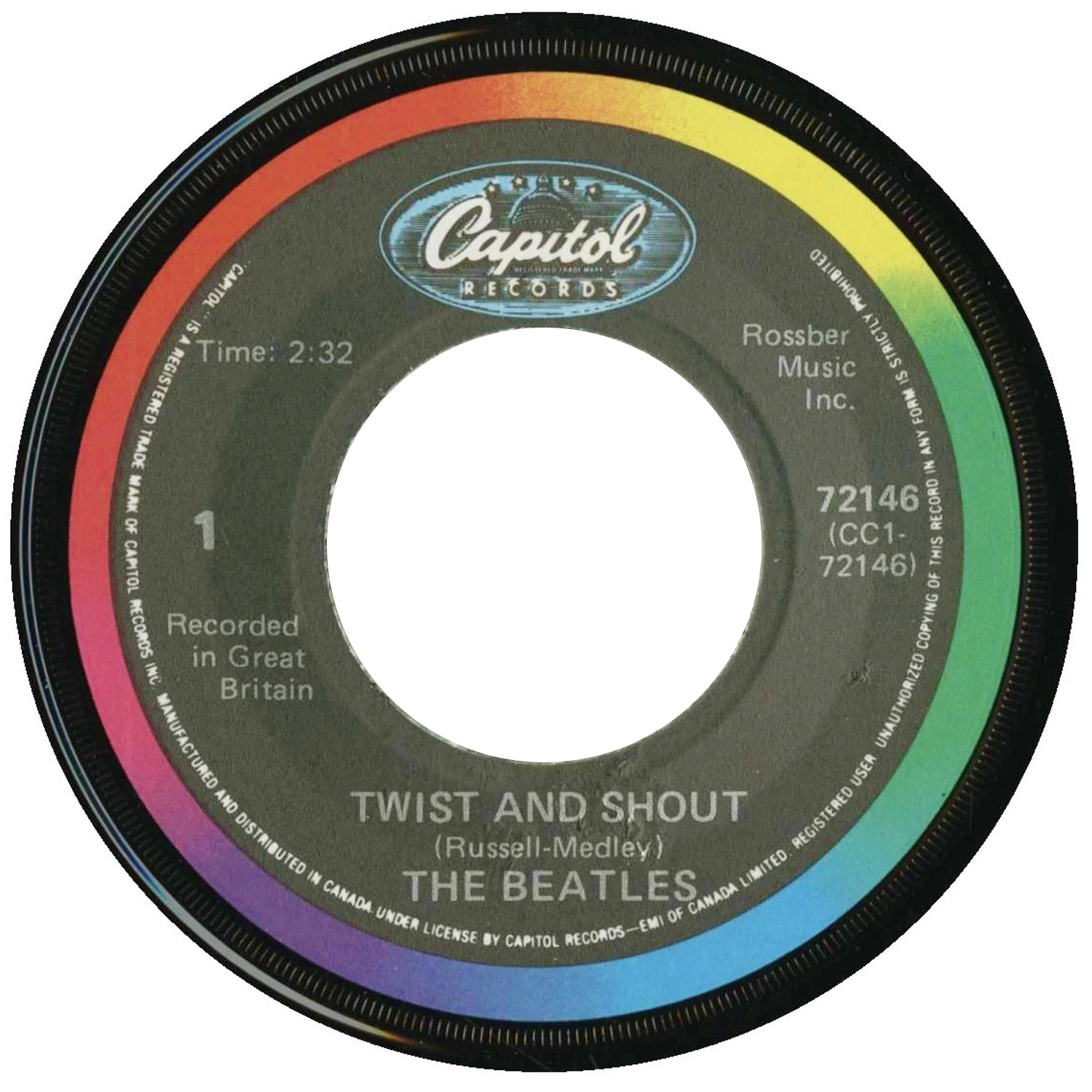
6. Cinram
Cinram was another subcontractor chosen by Capitol. Cinram pressed LPs for Capitol of Canada during the late 1970s (1977-1983) and then later became the de facto choice in August 1988 (when CBS hired Cinram to take over pressing operations) for an ultimate batch of Beatles LP as CDs became the official standard format. Unlike Keel, Cinram pressings were of very good quality and their last retro rainbow pressings are amongst the best sounding of all Beatles Canadian pressings. Cinram discs are recognized by their smaller 29 mm pressing ring (for early LPs - left images), and by their added 70 mm recessed plate on their later pressings (right image). Cinram pressing can also often be identified by trail-off markings (stamped CR in a circle, or cursive hand etched stylized CR), although some Cinram discs were pressed from Capitol-made masters and bear only Capitol markings. The retro rainbow Cinram pressings retain the CBS matrix markings, being made from the CBS lacquer cuts they inherited during the transfer of pressing duties.
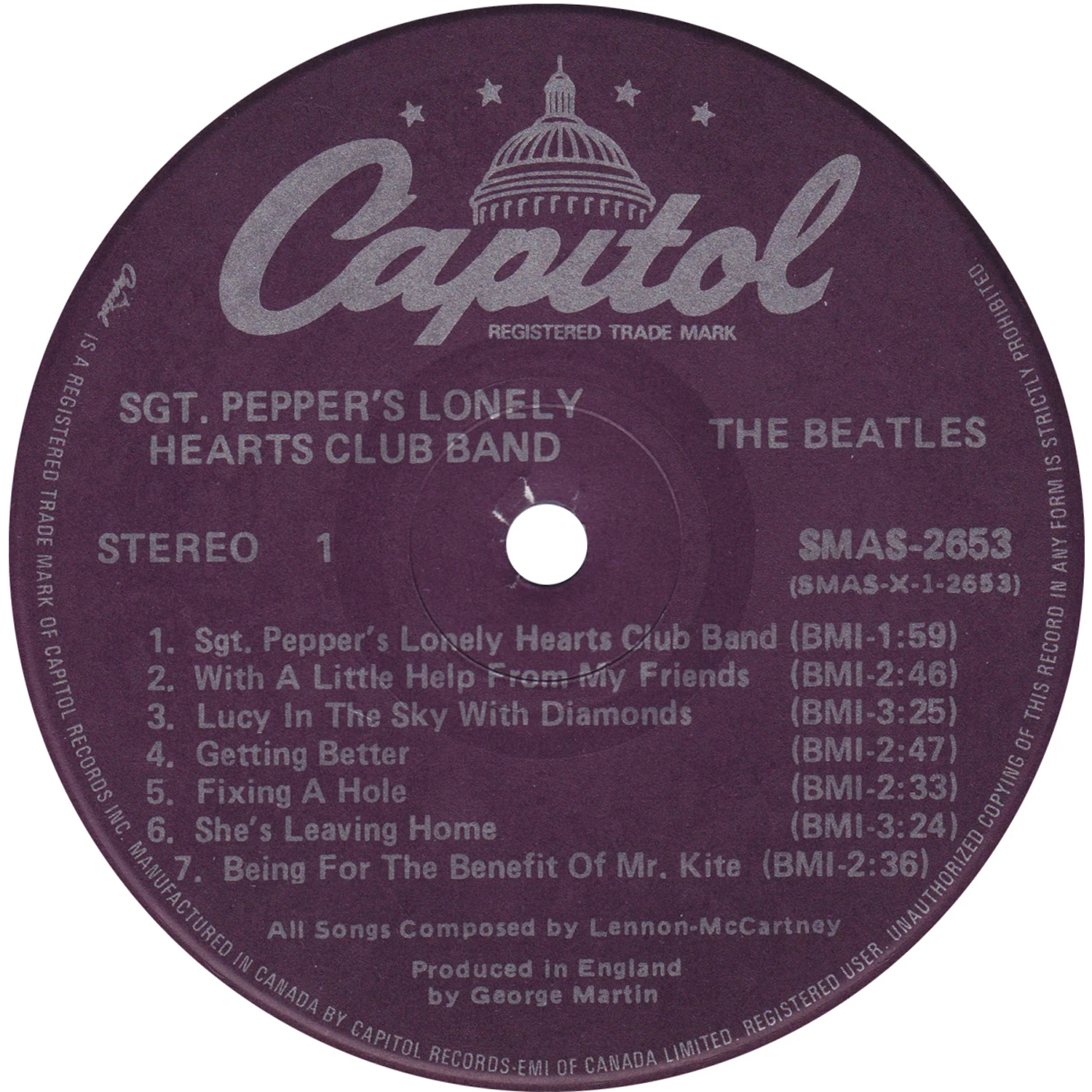
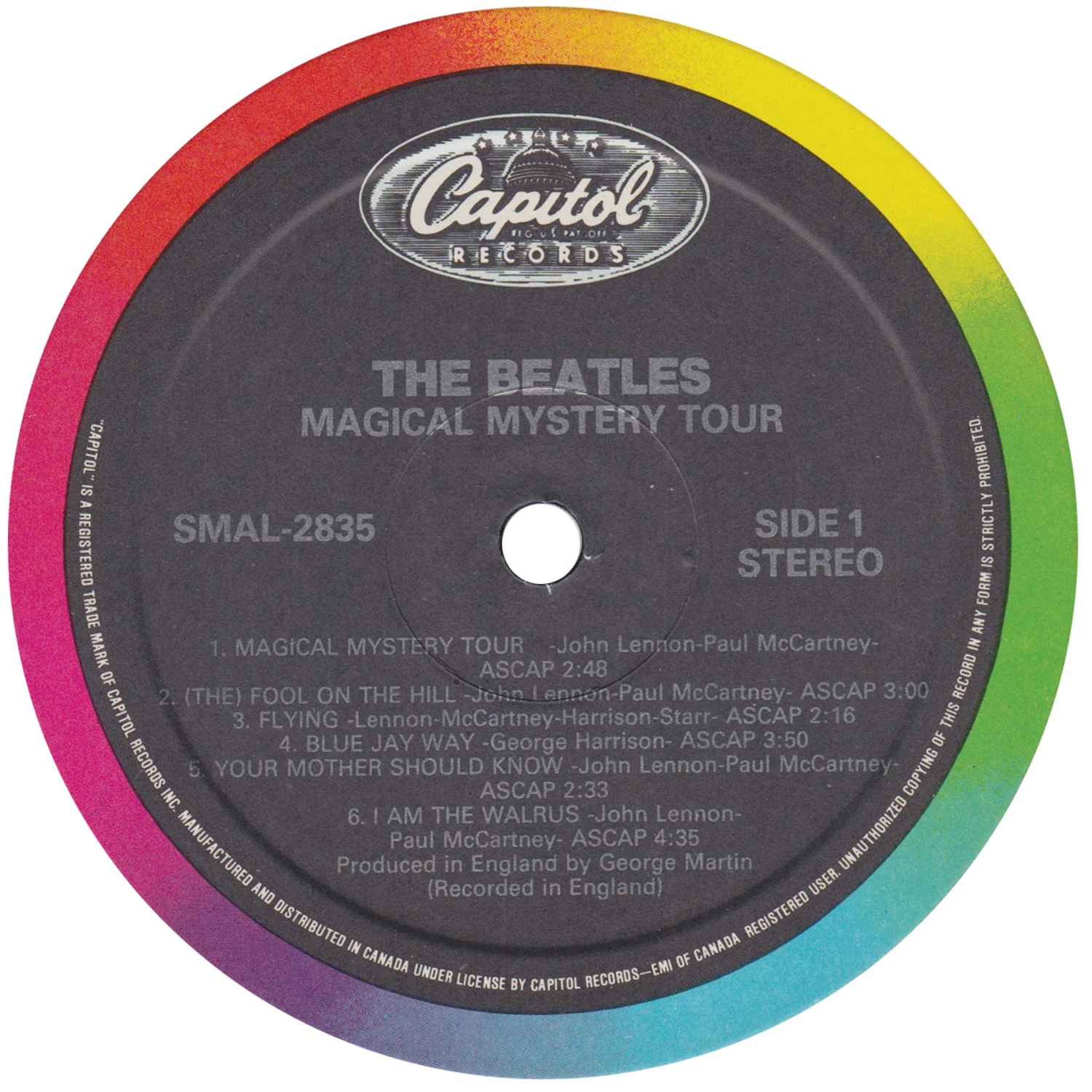
7. Quality
Some non Capitol albums and singles were not distributed by Capitol and were therefore commissioned by other companies who also subcontracted external pressing plants. One of these "other players" was Quality, who pressed records for Metro and MGM. Quality discs are recognized by their 70 mm pressing ring similar to RCA, (deep groove not as sharp as RCA pressings for early LPs - left images) and a thin 70 mm ring for later pressings (centre image). Singles, on the other hand, are quite similar to RCA or Compo discs, but are overall thicker and sturdier (right image) and possibly not made from the same vinyl compound. Quality usually identifies records that they pressed ("Manufactured by Quality Records Limited").
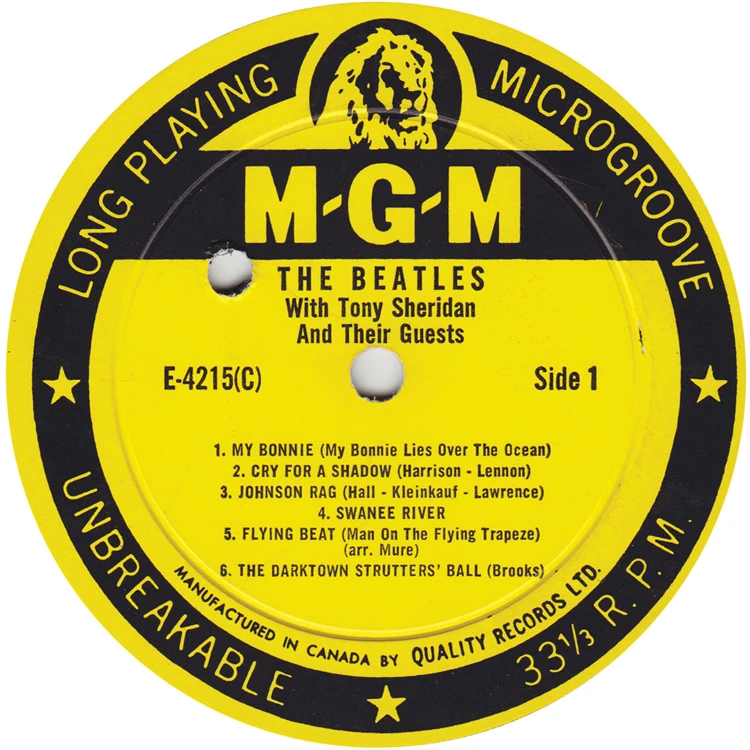
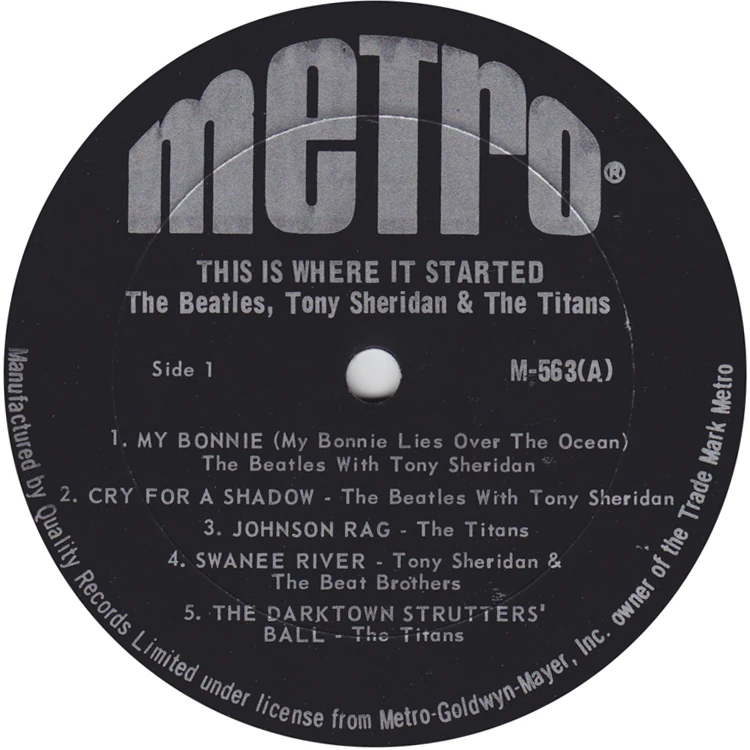
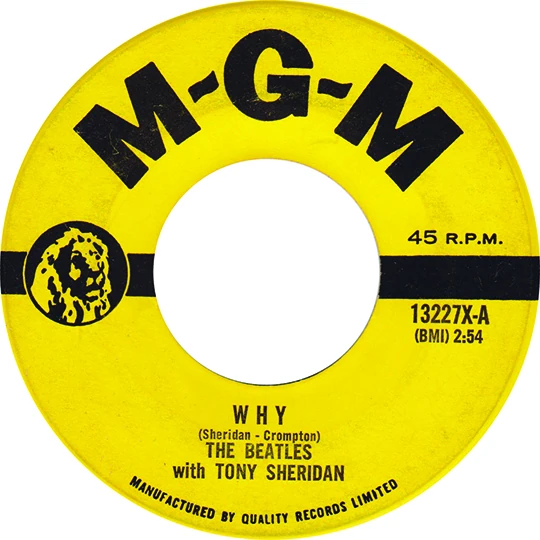
Exceptionally, late copies of Twist and Shout were pressed by Quality (See 45.72146.1.2). The official reason is unknown, but it is likely that Capitol was exploring options to diversify their production subcontracting agreements. Similar explorations have been done with Keel in the 1970s, so it is not impossible that this Quality venture was of similar nature. No Quality-pressed Capitol LP has been documented to date, although some collectors suggested that the "odd RCA ring" pressings could in fact be from Quality, but this needs to be confirmed because of conflicting information on the subject.
8. Ampex, Lear Jet and Cinram (Tapes)
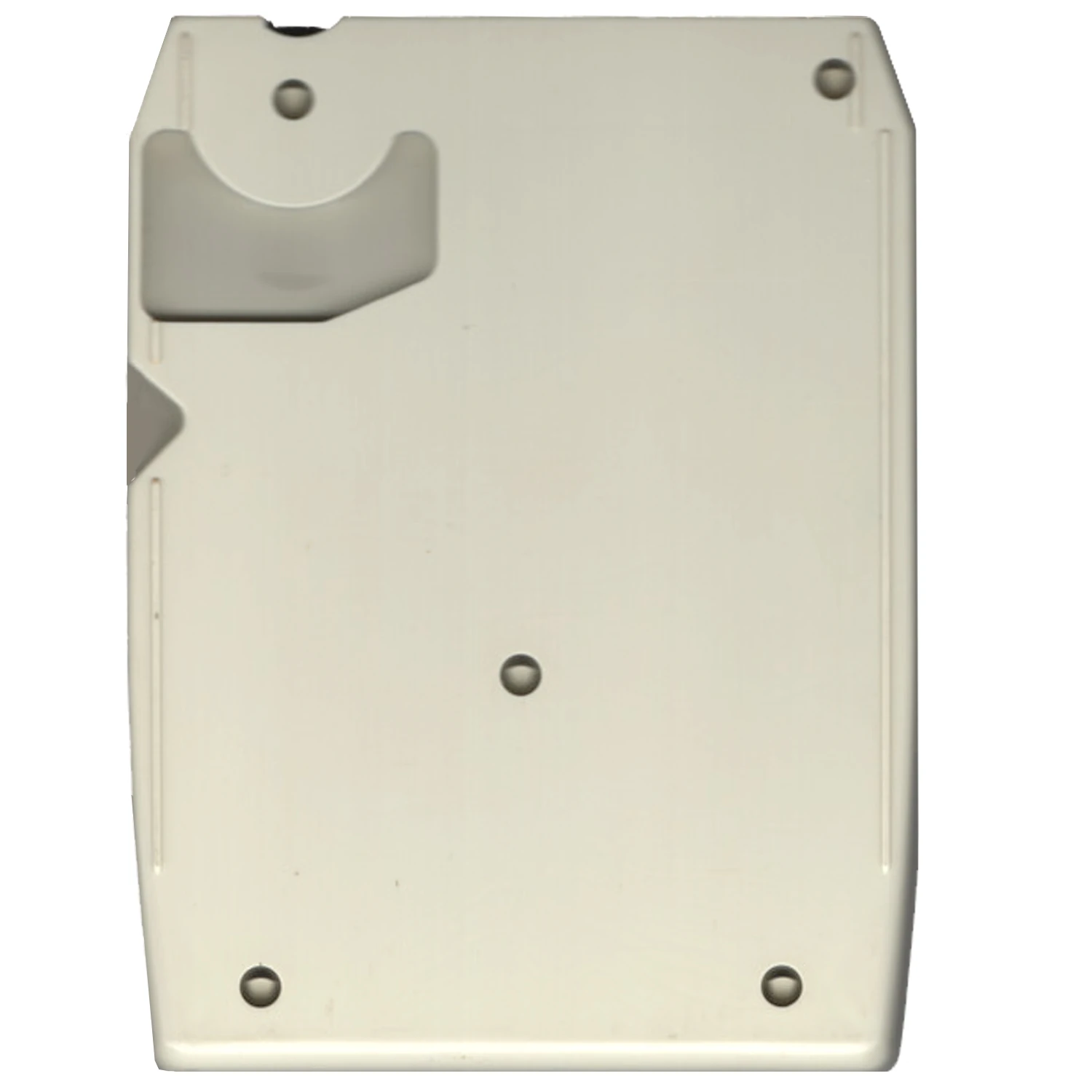
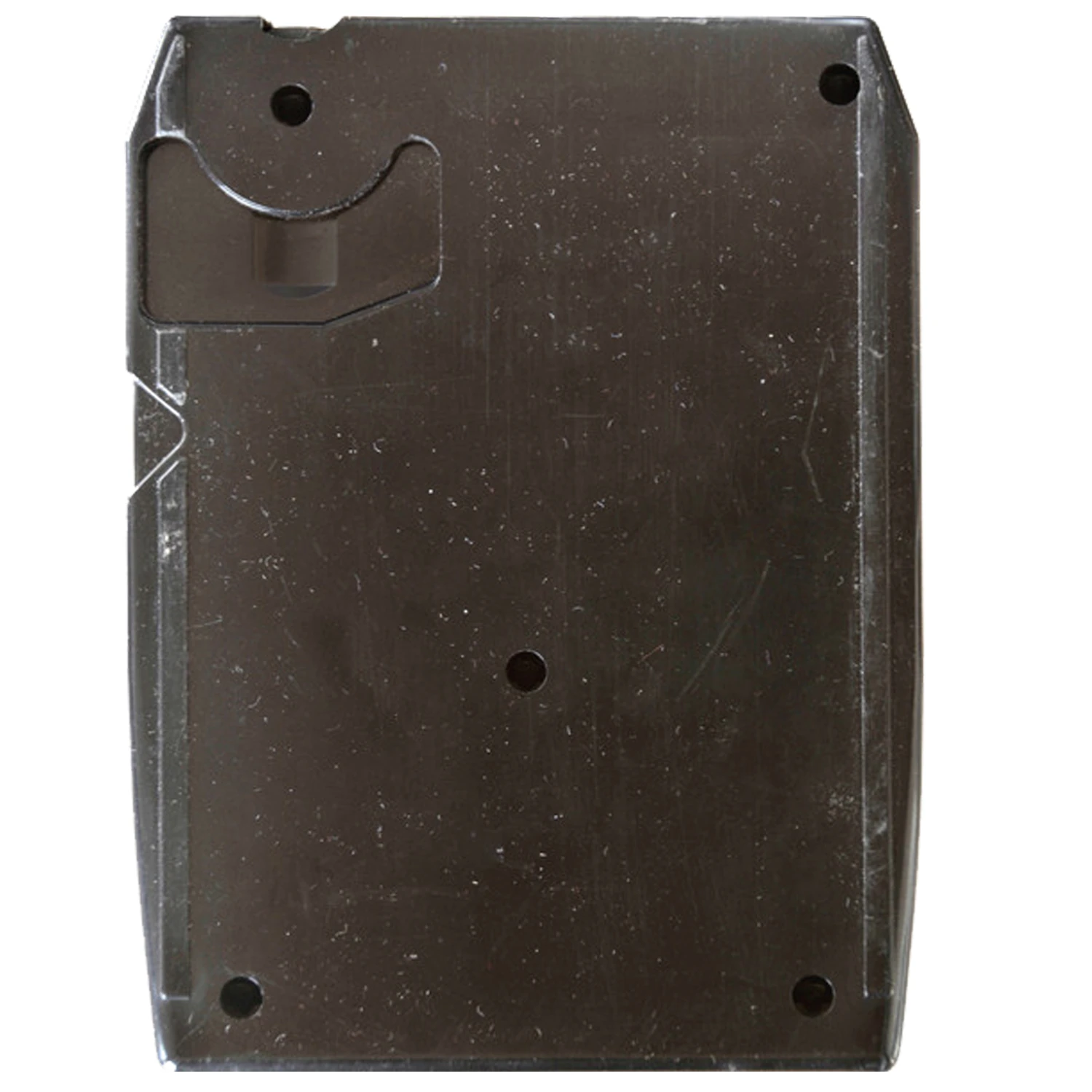
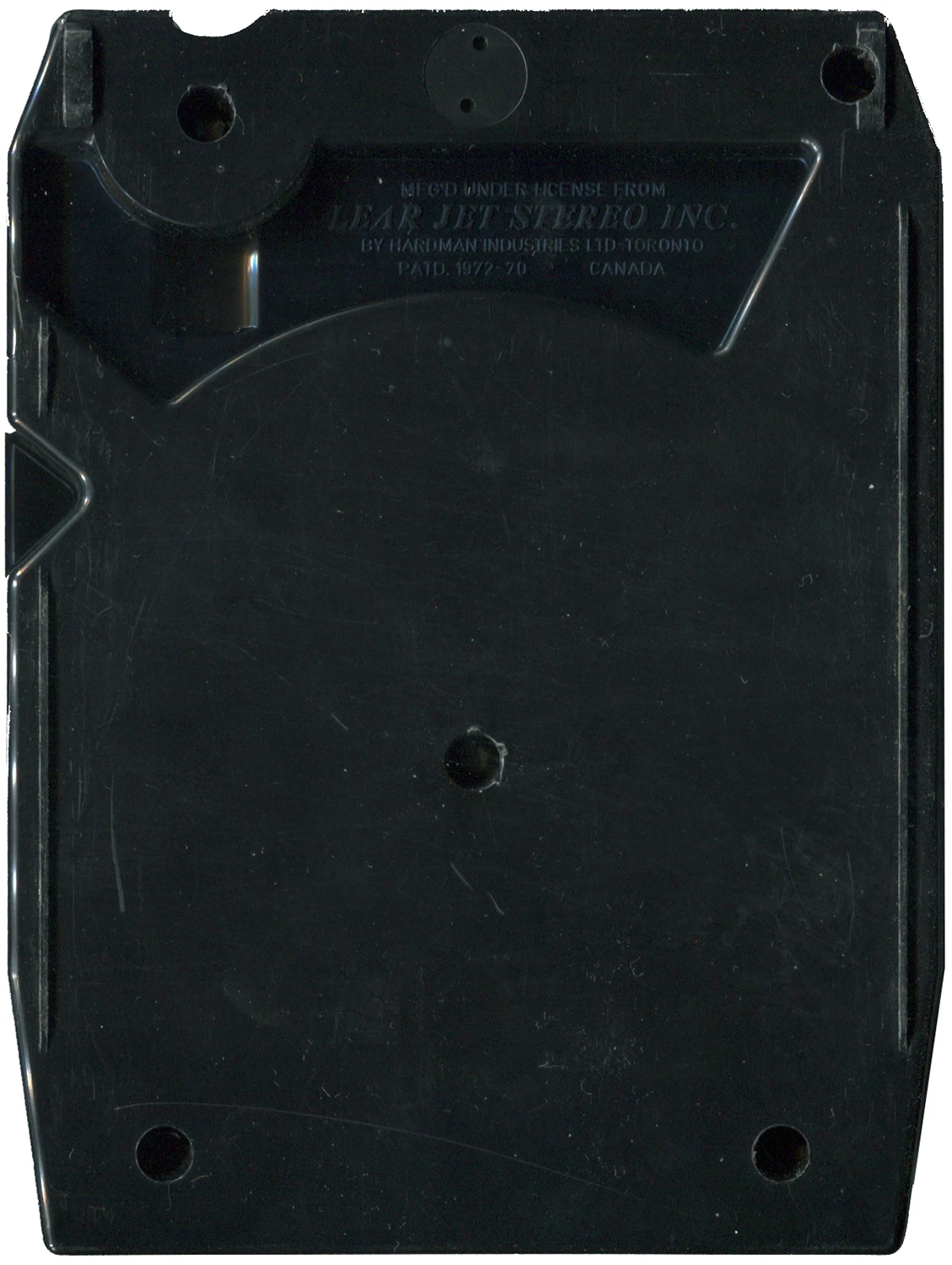
Capitol of Canada was not equipped to produce tapes in the late 1960s, so the company subcontracted other manufacturers, like Ampex's Canadian subsidiary, who produced both reel tapes, early cassettes (sometimes with USA moulds identifying the tapes as "Made in USA") and 8-tracks (under its Datapack format - left and centre images). Ampex cassettes are usually found on off-white shells, with white paper labels that carry no Capitol legal text. The arrangement did not last: Capitol opened its own tape plant in 1970, in a leased building, and moved it to the Malton site the following year (source: RPM, 25 June, 1977), so that from around mid 1971 Canadian Beatles cassettes were made in-house, on bright white (later butterscotch and black) shells. Capitol also made its own magnetic tape, sold under the Audiotape name. In 1973, 8-Track tape production was moved to The Lear Jet Corporation who produced Canadian 8-Tracks until 1976 (often with USA slicks on the Canadian shell -- right image).
Capitol kept making cassettes until late 1994, when its Mississauga plant turned to CDs and cassette production was handed over to Cinram, in Scarborough. Cinram made the last Canadian Beatles cassettes, on clear shells, until 2001 (see Cassette Shells).
9. Disque Americ (CDs)
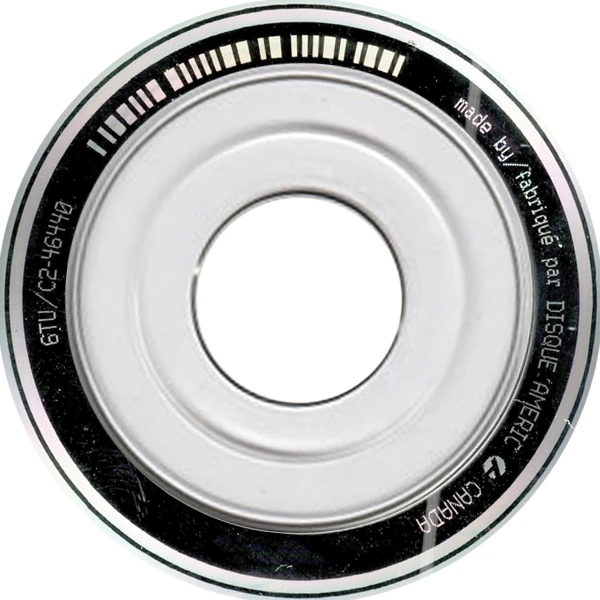
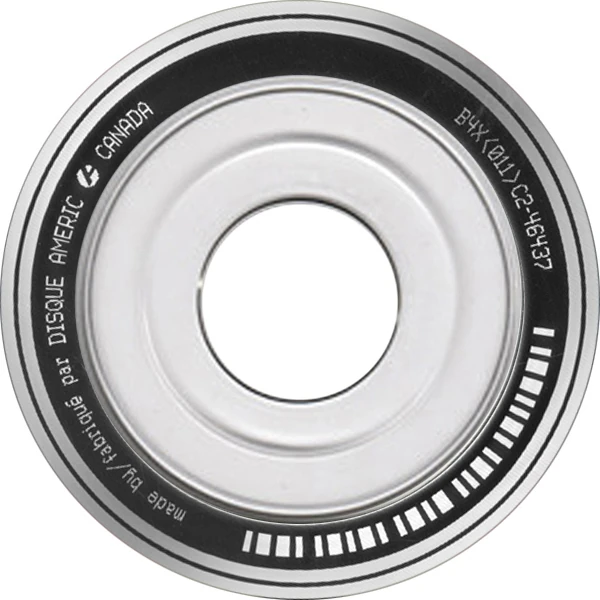
Disque Americ (or Americ Disc) was founded in Montreal and operated from Drummondville (Québec) between 19 February, 1987 to February 2011. Beatles CDs were pressed by Disque Americ between April 1990 and August 1995. This company was originally created as an affiliate company to MPO. The legal ownership has changed over time.
10. Cinram (CDs)
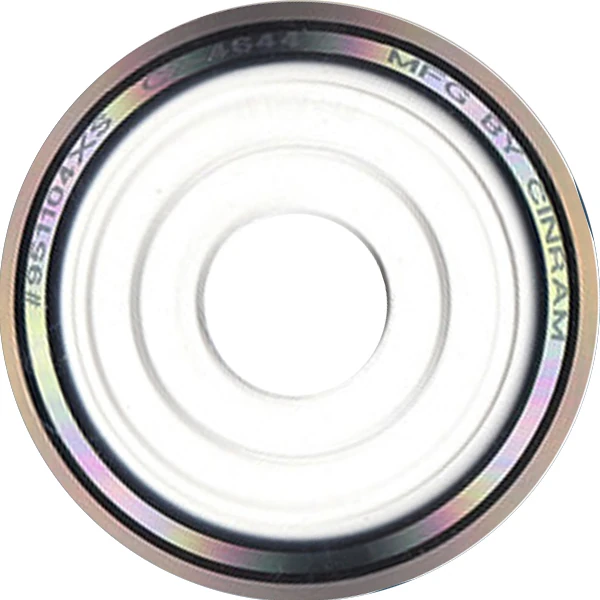
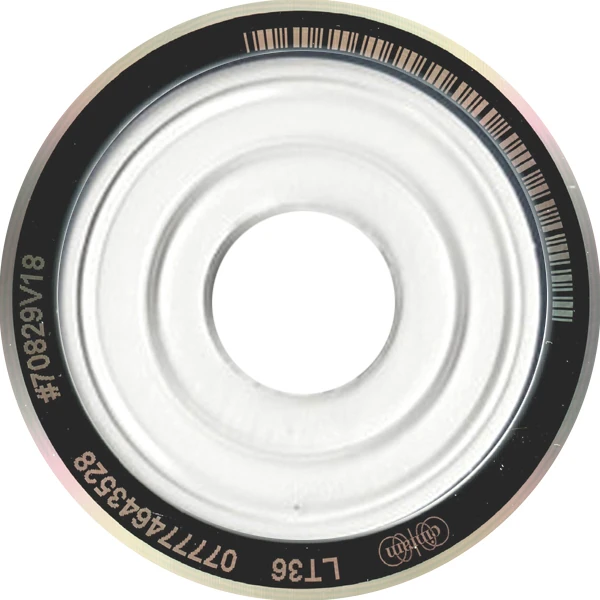
Founded in 1969 in Montreal, Cinram pressed many Beatles LPs in the 1970s and 1980s, but they also provided CD pressing services for EMI in November 1995, pressing their back catalogue as the Anthology series was launched (Anthologies were pressed at EMI's new pressing plant). The 1995 CDs were identified with a plain text company name. Cinram was not reconsidered until 2007 (with the spinning disc logo) when the EMI pressing plant shut down. Cinram pressings are easy to date; the matrix number consists of the date the glass master was produced. Cinram has pressed Beatles CDs until 2014 when Canadian operations were moved to the USA, and as of 2022, worldwide supplies for Universal come from Germany (Optimal).
11. EMI (CDs)
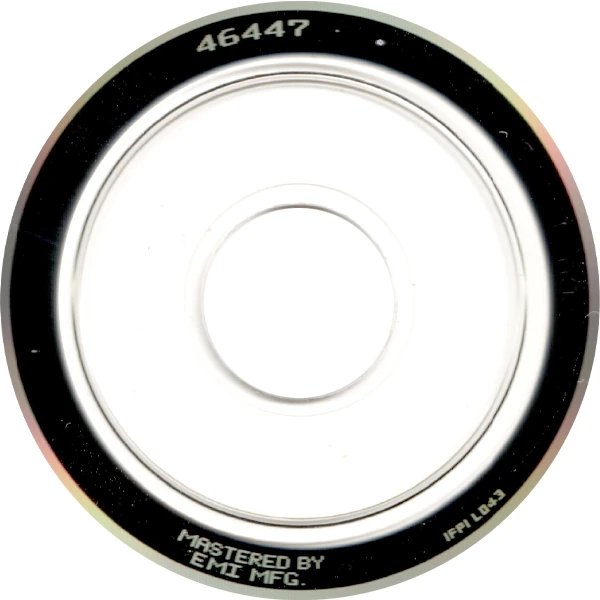
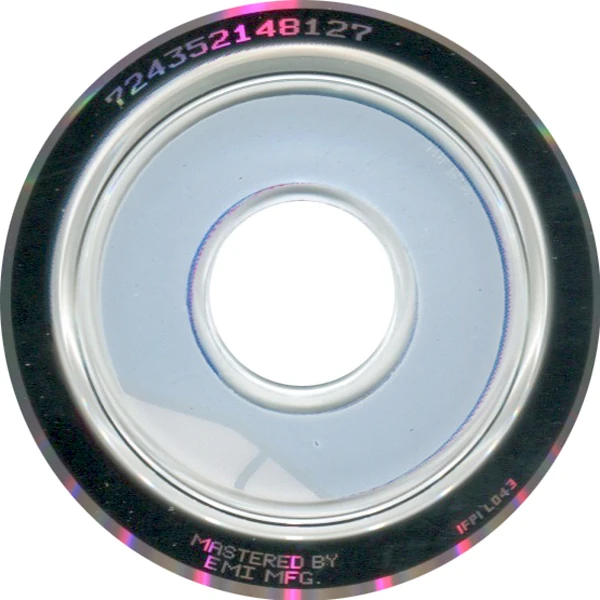
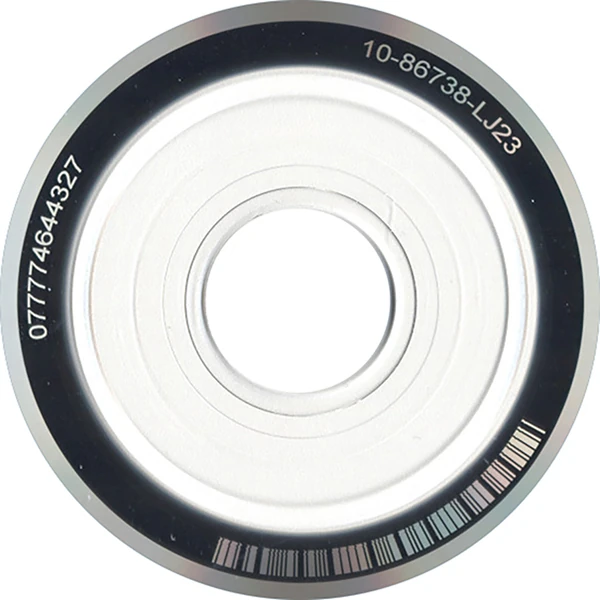
EMI opened its own CD pressing plant in late 1995, and operated until 2007. These pressings have a "non-textured" centre area and are identified by the EMI markings in the trail-off area. Unlike the previous DA and Cinram pressings, these Canadian pressings were made from the (correct) glass masters sent from the USA. There are three generations of EMI pressings (short/long/barcode number matrix formats).