
← Back to Identification Guide
Open reel tape releases were niche products aimed at the audiophile market of the time (people dedicated to high-quality audio), who used high-end playback systems. Audiophiles generally leaned towards classical and jazz music rather than pop music in this format, so these Beatles tapes are extremely scarce in any condition today.
As a general rule, Beatles reels are divided in two main series: 1. the white box series, and 2. the gold box series. Every Canadian reel documented so far is pictured side by side in the reel section of the Interesting Items page.
Both the tapes and boxes were manufactured in Canada, but we often printed our slicks using US artwork. The most telling detail to distinguish the Canadian pressings from the US issues is the Color of the box: Canada always used WHITE cardboard boxes, while the USA used either BROWN or BLUE boxes. Canadian reels were clear with a gold sticker, while US reels were beige with the same gold sticker design (USA did have clear reels, but these had white stickers and were found on their blue box 7 1/2 IPS tapes series, which we did not have in Canada); so clear reels with gold stickers are unique to Canada.
Canadian white box release dates
Canada did not follow the American release schedule. Instead, Capitol issued the reels in small batches, sometimes settling for the cheaper "double feature" tape pairing two albums on a single reel in 1964 and 1965. From Sgt. Pepper onwards, the release schedule of the reels followed the release dates of their albums. The confirmed Canadian dates are:
* The white box series is otherwise a 7" / 3 3/4 IPS series, with three exceptions: Revolver was cut at 7 1/2 IPS (the only Canadian reel at that speed), and Meet The Beatles and the first Yesterday and Today came on 5" reels.
It is not known if white box Apple albums were ever produced in the reel format in Canada. All examples found to date are US brown box tapes with beige reels, which might have been imported to Canada instead of being manufactured here. Another consideration is that the Gold Box series was released in 1970, so it is likely that Hey Jude and Let It Be have only been considered for the Gold Box series, while Canadian reels of The White Album, Yellow Submarine or Abbey Road have never been documented in the white box series.
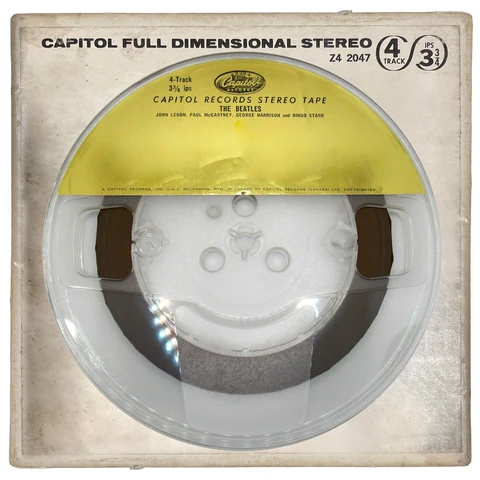
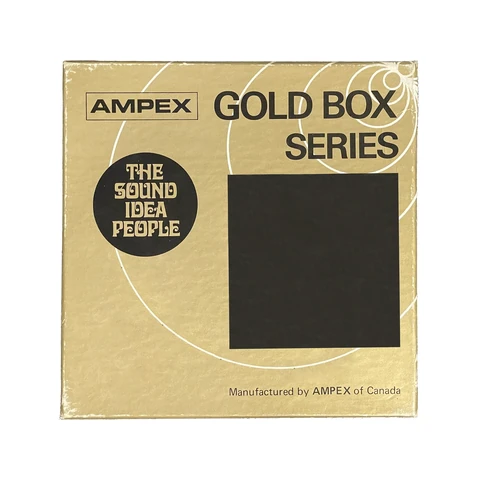
In 1970, in a last attempt to push the format, Capitol created the Gold Box Series of reel tapes (5" reels) featuring hit albums of the time. Most Beatles albums (and a few solo albums) were produced in this series of open reels.
The Gold Box series featured reels that were almost identical to the USA's blue box 7 1/2 IPS tapes: a clear reel with a white label, but Canadian tapes were running at the lower 3 3/4 IPS, carried Canadian markings and, most tellingly, had a distinctive gold box design.

Entries in this archive are numbered so you can easily refer to them when trying to organize your collection. A typical variation number would be presented in an Alpha Decimal format that sequentially identifies:
As an example, the Columbia pressing of the White Album featured on the 2nd generation orange label would be numbered LP.APP101.7.1 : in other words, the LP version of the Apple album number 101 (the White Album's catalogue number), on the 7th label type (The orange 2nd gen. label), and this is the first variation of this category.
Or, the Gold Box Series Reel to Reel release of Sgt Pepper's would be numbered RE.2653.2.1: in other words, the reel version of the title with catalogue number 2653 (Pepper), from the second series of reels (Gold Box), and this is the first variation of this category.
Finally, the last clear shell cassette issue of Abbey Road would be numbered K7.APP383.9.2: in other words, the cassette version of the Apple album numbered 383 title (Abbey Road), from the ninth series of tapes (Color J-card XDR Clear Shell), and this is the second variation of this category.
...and so on.
This allows anyone who has learned the numbering system to identify with precision any variation, just from its ID number. This system does not replicate other numbering systems (e.g. Spizer, or Valiquette), but has been tailored to the structural logic of this archive. For detailed explanations of label variations and their relative numbers, visit the FORMATS page from the main menu.